History of Chinese Animation
Introduction
Chinese animation, known as "donghua" in Mandarin, has a rich and complex history that has evolved over decades. Unlike its Western counterpart, which was heavily influenced by the likes of Walt Disney, Chinese animation has drawn from its unique cultural heritage, incorporating traditional art forms such as puppetry, paper-cutting, and ink painting. The industry's journey has been characterized by periods of significant growth and decline, akin to the narrative arcs of its animated heroes and heroines.
Early Beginnings (1920s-1940s)
The origins of Chinese animation can be traced back to the 1920s. One of the earliest known animations was The Camel’s Dance (1935) by the Wan brothers, pioneers in the field. However, it was the release of Princess Iron Fan in 1941 that marked a milestone. This feature-length film was inspired by traditional Chinese folklore and was released just four years after Disney's Snow White and the Seven Dwarfs. Despite its limited resources, Princess Iron Fan achieved significant domestic and international acclaim and influenced notable figures such as Osamu Tezuka, the father of Japanese manga.
The Golden Age (1950s-1980s)
The period from the 1950s to the early 1980s is often considered the golden age of Chinese animation. During this time, the Shanghai Animation Film Studio became a powerhouse, producing works that were celebrated both at home and abroad. Notable productions include The Monkey King: Havoc in Heaven (1961-1964), a tale based on the classic Chinese novel Journey to the West. This film is remembered for its integration of Peking Opera elements and traditional Chinese art styles, setting a benchmark for future productions.
Also significant were Nezha Conquers the Dragon King (1979) and Three Monks (1980), which continued to demonstrate the depth and creativity characteristic of Chinese animation during this era. These works were characterized by their integration of traditional Chinese art forms, such as ink and wash painting, puppet show, and paper-cut techniques, which gave them a unique aesthetic appeal. The studio's commitment to quality and innovation solidified its reputation as a pioneer in the field.
Decline and Challenges (1980s-2000s)
Post-1980s, the Chinese animation industry entered a period of decline. This was partially due to the opening up of China's economy, which resulted in a flood of foreign animations, particularly from Japan and the West, capturing the attention of Chinese audiences. During this time, there was a significant talent drain, and the industry struggled to adapt to a market-driven economy. Many young animators sought inspiration from Japanese manga and anime, leading to a hybridization of styles.
Resurgence (2000s-Present)
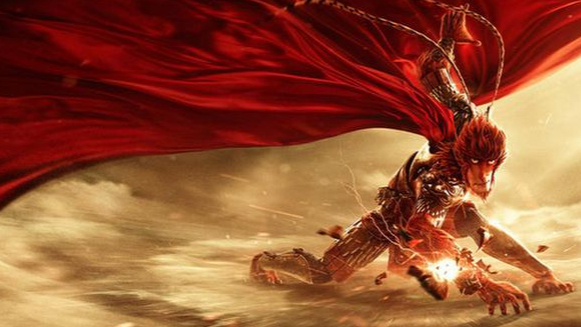
Despite the challenges, the Chinese animation industry has seen a resurgence in recent years. This revival has been driven by a renewed interest in traditional Chinese culture and art, as well as advancements in digital technology. Films like Monkey King: Hero Is Back (2015) and Big Fish & Begonia (2016) have been both commercially successful and critically acclaimed, showcasing the potential of Chinese animation to merge traditional storytelling with modern techniques. Recent productions like Ne Zha, Da Hufa and Chang'an have further pushed the boundaries of animation, exploring complex themes and sophisticated visual styles that appeal to a wide range of viewers. The international success of these productions has encouraged further cross-cultural collaborations and has paved the way for Chinese animation to become a significant player on the world stage.
Moreover, the growth of digital platforms and increasing government support have provided new avenues for animators to reach audiences. The rise of a passionate fanbase for animation, comics, and games (ACG) culture has further fueled this renaissance, with original Chinese animations gaining popularity both domestically and internationally.
Influence of Traditional Art Forms
Traditional Chinese art forms have played a pivotal role in shaping the aesthetic and narrative style of Chinese animation. Techniques such as ink wash painting and papercutting offer a distinct visual language that sets Chinese animation apart from its Western and Japanese counterparts.
Influence on Global Animation
Cross-Cultural Collaborations
Cross-cultural collaborations have played a crucial role in the evolution of Chinese animation, fostering creative exchanges that have enriched the industry. Partnerships with international studios have provided Chinese animators with opportunities to learn from different storytelling techniques and animation styles, leading to the creation of unique hybrid works. Films like Kung Fu Panda, a collaborative effort between DreamWorks Animation and Oriental DreamWorks, exemplify the successful fusion of Eastern and Western influences, highlighting the potential of cross-cultural collaborations in animation.
Impact on Global Trends
The rise of Chinese animation has had a significant impact on global animation trends, challenging traditional narratives and introducing new artistic perspectives. The success of Chinese animated films has inspired animators worldwide to explore diverse cultural themes and experiment with different animation techniques. As Chinese animation continues to grow, its influence is expected to expand, shaping the future of the global animation industry and offering audiences a broader array of stories and styles.








